Miss Claire Holt
SENCO
- send@olota.uk
Mrs Angie Baldwin
SEND Governor
- admin@olota.uk
Special educational needs and disabilities (SEND) can affect a child or young person’s ability to learn.
They can affect their:
-
-
behaviour or ability to socialise, for example they struggle to make friends
-
reading and writing, for example because they have dyslexia
-
ability to understand things
-
concentration levels, for example because they have ADHD
-
physical ability.
-
A child or young person of compulsory school age is said to have SEND if they:
-
Have a significantly greater difficulty in learning than the majority of others of the same age.
-
Have a disability which prevents or hinders them from making use of educational facilities of a kind generally provided for others of the same age in mainstream schools or mainstream post-16 institutions.
Children with SEND may need extra help or support, or special provision made for them to allow them to have the same opportunities as others of the same age.
All teachers are teachers of pupils with special educational needs and the Class Teacher, who knows the child best, should be the first port of call for parents. In addition, each school has a SENDCO who provides support about a child’s needs, progress and support.
What is a SENDCO?
A SENDCO oversees and coordinates the support, intervention, provision and progress of all pupils on the SEN register.
This includes:
-
Supporting the identification of children with special educational needs.
-
Co-ordinating provision for children with SEN.
-
Observations and diagnostic assessments
-
Monitoring progress of pupils with SEND
-
Liaising with parents of children with SEN.
-
Liaising with other providers, outside agencies, educational psychologists and external agencies.
-
Ensuring that the school keeps the records of all pupils with SEN up to date.
-
Training and professional development
-
Transition to or from school to another setting
-
SEND policy and Local Offer
We are committed to working in close partnership with parents to support every child’s learning and development.
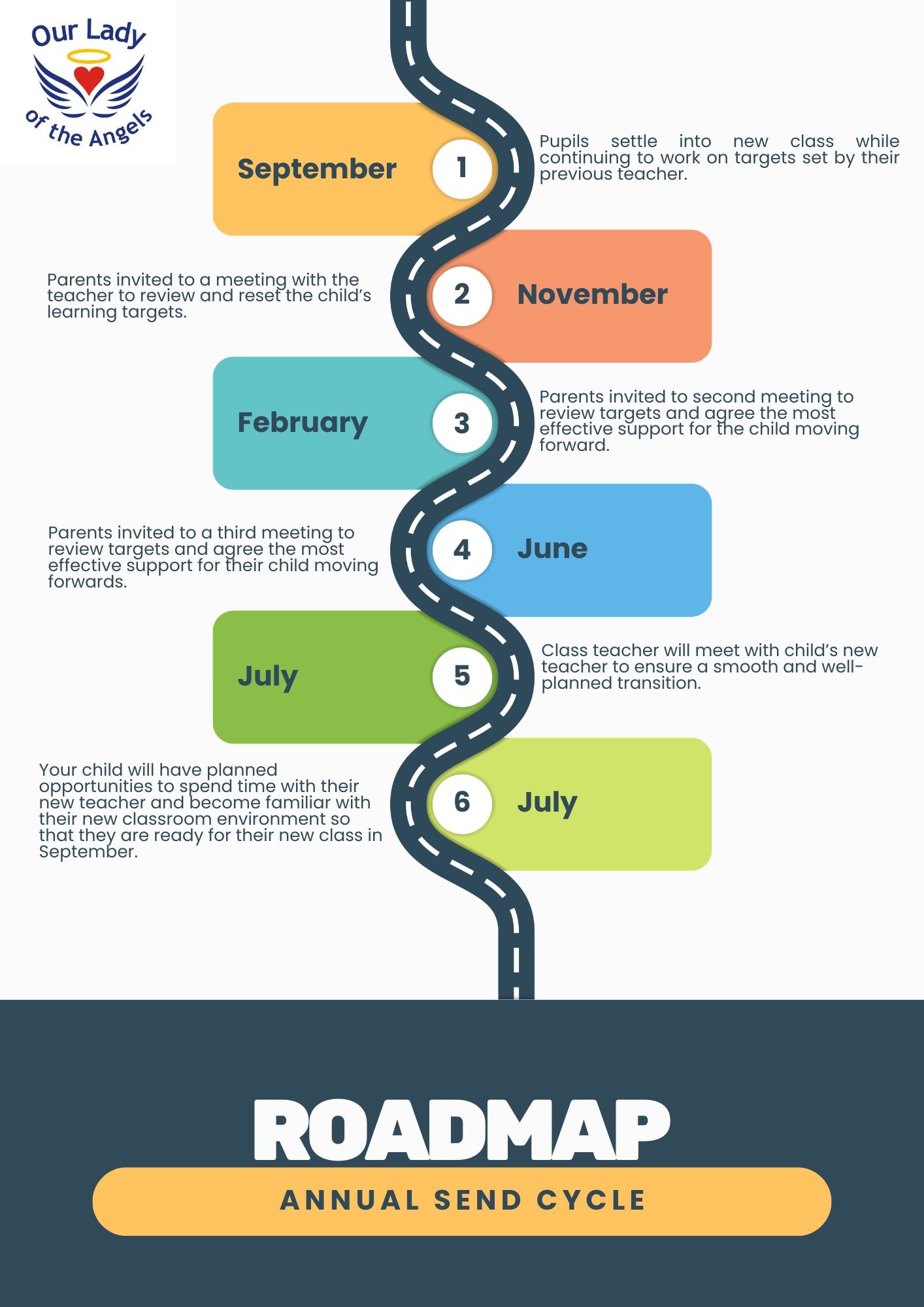
Throughout the academic year, you will receive updated Individual Learning Plans (ILPs) for your child at key points, as outlined in the schedule below. Each term, your child’s teacher will meet with you during an extended, face-to-face parents’ evening, with a specific focus on reviewing and discussing your child’s ILP.
These meetings provide valuable time to:
· Review your child’s progress
· Discuss successful strategies and areas for development
· Agree on clear next steps and tailored support
· Ask questions and share insights about your child’s learning
By working together and maintaining open communication, we can ensure your child receives the guidance, encouragement and support they need to make progress across all areas of learning and achieve their full potential.
Annual SEND Cycle
SEND Information Report